

What You’ll Gain From This
Before you close this tab, let’s review the tangible outcomes you can expect by applying these AI-focused strategies to your career:
Enhanced Employability: Master the specific AI skills that modern recruiters and Applicant Tracking Systems are actively prioritizing.
Future-Proof Job Readiness: Protect your mid-career trajectory by automating mundane tasks and focusing on irreplaceable strategic judgment.
Interview Confidence: Utilize AI-driven mock interviews and feedback loops to clearly articulate your value proposition to hiring managers.
Streamlined Workflow: Learn to integrate AI seamlessly into your daily marketing tasks, significantly boosting your output and efficiency.
The New Marketing Landscape: Are You Falling Behind?
If you are an experienced marketing professional, you have likely noticed a seismic shift in your daily operations. The days of relying solely on traditional analytics and manual campaign setups are rapidly fading.
Today, Artificial Intelligence (AI) is rapidly redefining the landscape of marketing, altering traditional roles, and demanding an entirely new skill set. The question is no longer whether AI will change marketing, but how fast you can adapt.
A significant gap currently exists between individual enthusiasm for AI tools and actual organizational readiness. While many marketers want to use AI, they lack the strategic roadmap to integrate it effectively.
This gap presents a massive opportunity. Those who take the initiative to bridge it are unlocking unprecedented avenues for career growth and commanding attention from top recruiters.
The Truth About AI and Marketing Jobs
The most common fear echoing through marketing departments is: "Will AI replace my job?"
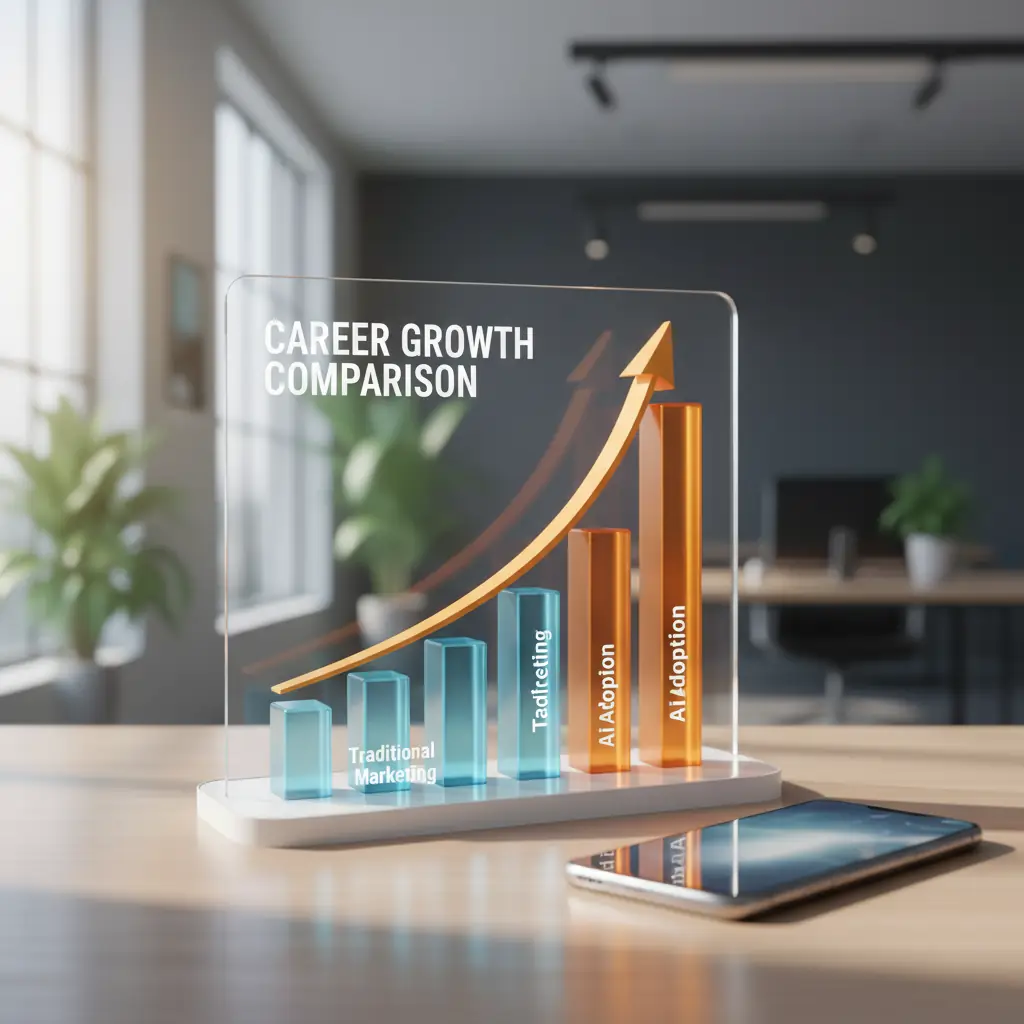
The short answer is no, but there is a vital caveat. AI is not replacing marketers, but it is aggressively reshaping roles and raising the bar for talent . Companies are indeed cutting some entry-level jobs and replacing them with automated AI workflows.
This highlights an urgent, unavoidable need for upskilling at all career stages. You are not competing against an algorithm; you are competing against the marketer who knows how to wield that algorithm flawlessly.
Simply put, AI-savvy peers will outpace those who are not. To secure your future, you must pivot your career strategy from passive observation to active, AI-enabled adoption.
Core Skill Shifts: Translating Expertise into AI-Enabled Actions
To thrive in this new hiring landscape, you must translate your existing expertise into AI-enabled actions. The modern skill taxonomy for marketing professionals now revolves around three critical pillars.
1. AI Literacy
AI literacy is the foundation of your modern career strategy. It goes beyond knowing how to log into ChatGPT; it involves understanding how to integrate generative models into your daily marketing workflow.
AI-Enabled Action: Shift from manual content drafting to AI-assisted ideation and scaling. Use AI to generate diverse copy variations, map out A/B testing frameworks, and summarize lengthy market research reports instantly.
2. Tech Skills
Technical skills in marketing have graduated from basic CRM management to advanced predictive analytics. Marketers must now understand how AI handles personalization and customer journey optimization.
AI-Enabled Action: Transition from historical data reporting to predictive, data-driven forecasting. Leverage AI tools to anticipate customer churn, segment audiences dynamically, and automate programmatic ad buying with precision.
3. Soft Skills: The Contrarian Insight
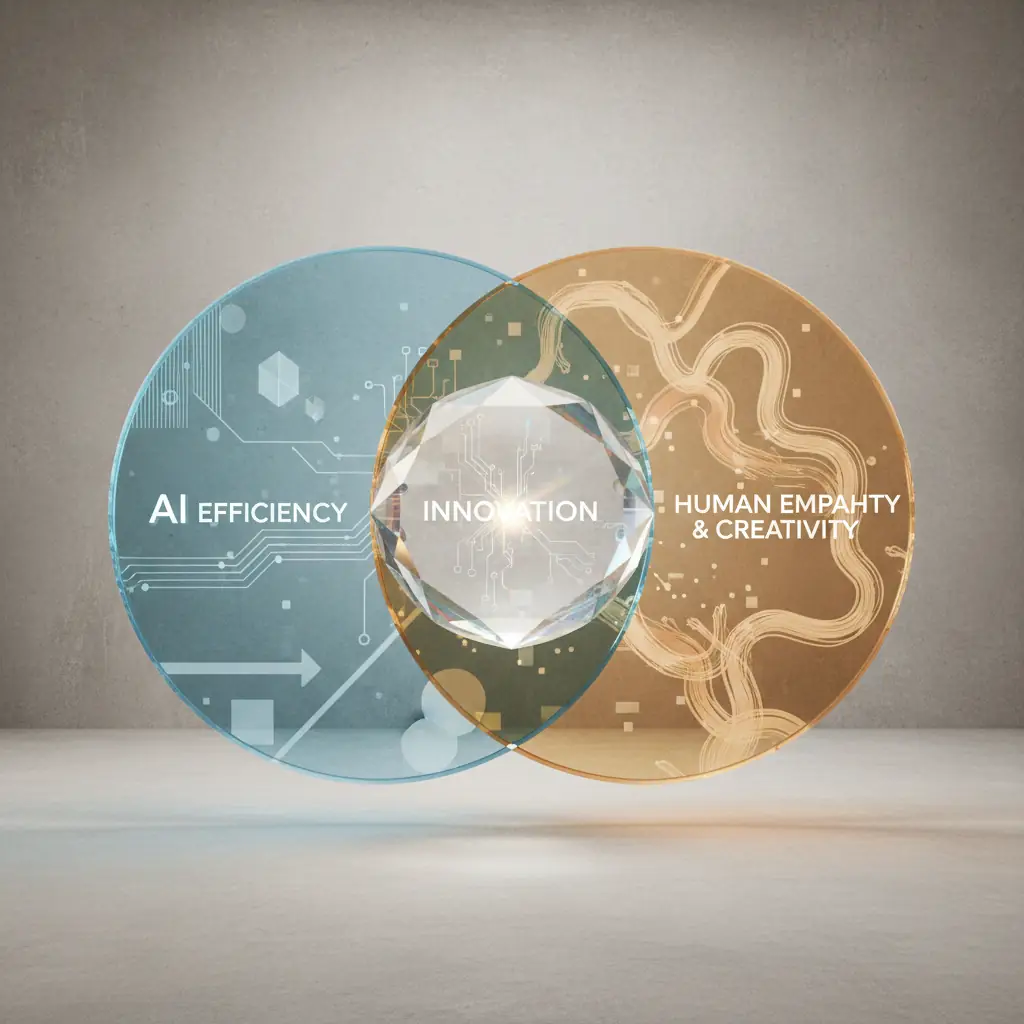
Here is the contrarian, often overlooked insight: as technical execution becomes automated, uniquely human skills become exponentially more valuable.
AI cannot replicate creativity, complex strategic thinking, or emotional intelligence. In fact, AI amplifies existing human judgment within an organization; it is not a standalone advantage.
AI-Enabled Action: Use AI to handle the tedious data crunching so you can focus on high-level strategic alignment and ethical oversight. Your empathy, storytelling, and ethical decision-making are what will ultimately interpret and guide the AI's output.
Step-by-Step: How to Integrate AI into Your Career Strategy
Knowing what skills you need is only half the battle. How do you actually demonstrate this AI proficiency to potential employers?
Here is a strategic, step-by-step "How-To" guide for using AI-driven EdTech platforms to supercharge your job readiness and interview preparation.
Step 1: Execute AI Resume Optimization & ATS Alignment
Traditional resumes often fail to pass Applicant Tracking Systems (ATS). Use AI-powered career platforms to scan your resume against live marketing job descriptions.
These tools can identify missing keywords—like "predictive analytics" or "LLM prompt engineering"—and suggest strategic rephrasing to ensure your application reaches a human recruiter.
Step 2: Practice with AI-Powered Mock Interviews
Demonstrating AI proficiency during an interview requires confidence. Leverage AI-powered mock interview tools to simulate high-pressure conversations.
These platforms can generate industry-specific questions, listen to your responses, and provide instant, granular feedback on your tone, pacing, and strategic depth.
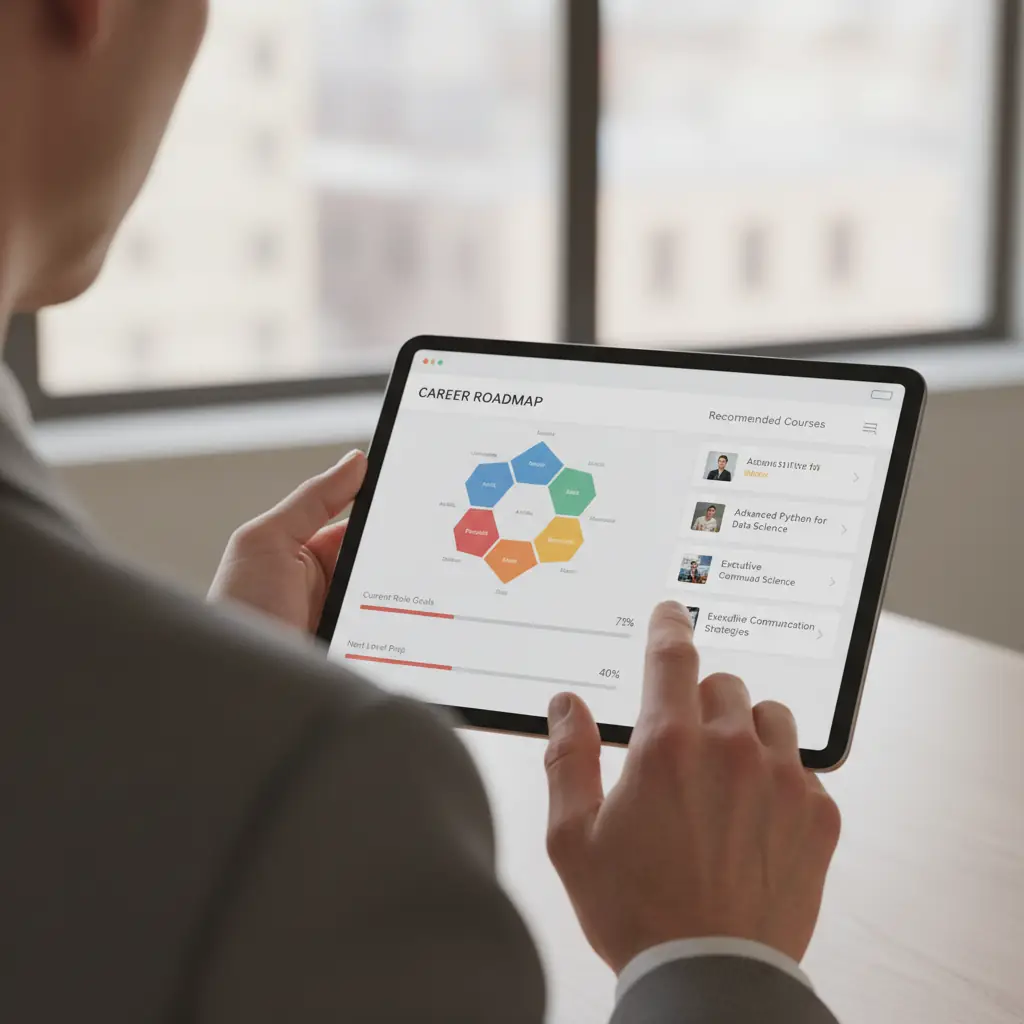
Step 3: Map Out a Personalized Career Roadmap
Do not guess what skills you need next. Advanced AI career platforms analyze your current competency matrix and cross-reference it with real-time labor market data.
This creates a personalized, dynamic career roadmap. It tells you exactly which AI certifications or upskilling courses will yield the highest return on investment for your specific trajectory.
Step 4: Actively Showcase Human-AI Collaboration
In your portfolio and interviews, explicitly highlight case studies where you combined AI efficiency with human creativity.
Discuss the ethical implications of using AI in your marketing campaigns, proving you understand responsible AI deployment. This nuanced perspective is highly sought after by senior leadership.
The Future of Marketing Teams
The future of marketing is deeply collaborative, but not just between human departments. The most successful teams will feature seamless human-AI collaboration.
A recent Microsoft study details how AI is transforming marketing roles, creating lucrative opportunities for those who adapt rather than eliminating vital positions.
By embracing AI as a supportive co-pilot rather than a threat, you free up your mental bandwidth. You transition from a tactician to a visionary leader, capable of guiding your brand through an increasingly complex digital ecosystem.
Conclusion
The integration of artificial intelligence into marketing is no longer a futuristic concept—it is the present reality. As traditional roles evolve and new opportunities emerge, the power to steer your career remains in your hands.
By actively developing your AI literacy, refining your technical proficiencies, and doubling down on your uniquely human soft skills, you position yourself at the forefront of this revolution. AI-driven platforms and career mentors are here to guide you, transforming anxiety into actionable, data-backed career growth.
Will you let the AI revolution happen to you, or will you harness it to redefine your marketing career?