
Your Outcomes
Learn how to use AI tools to quantify achievements and build a data-backed case for promotions.
Discover techniques to reduce bias and enhance the impact of your self-assessment using AI analysis.
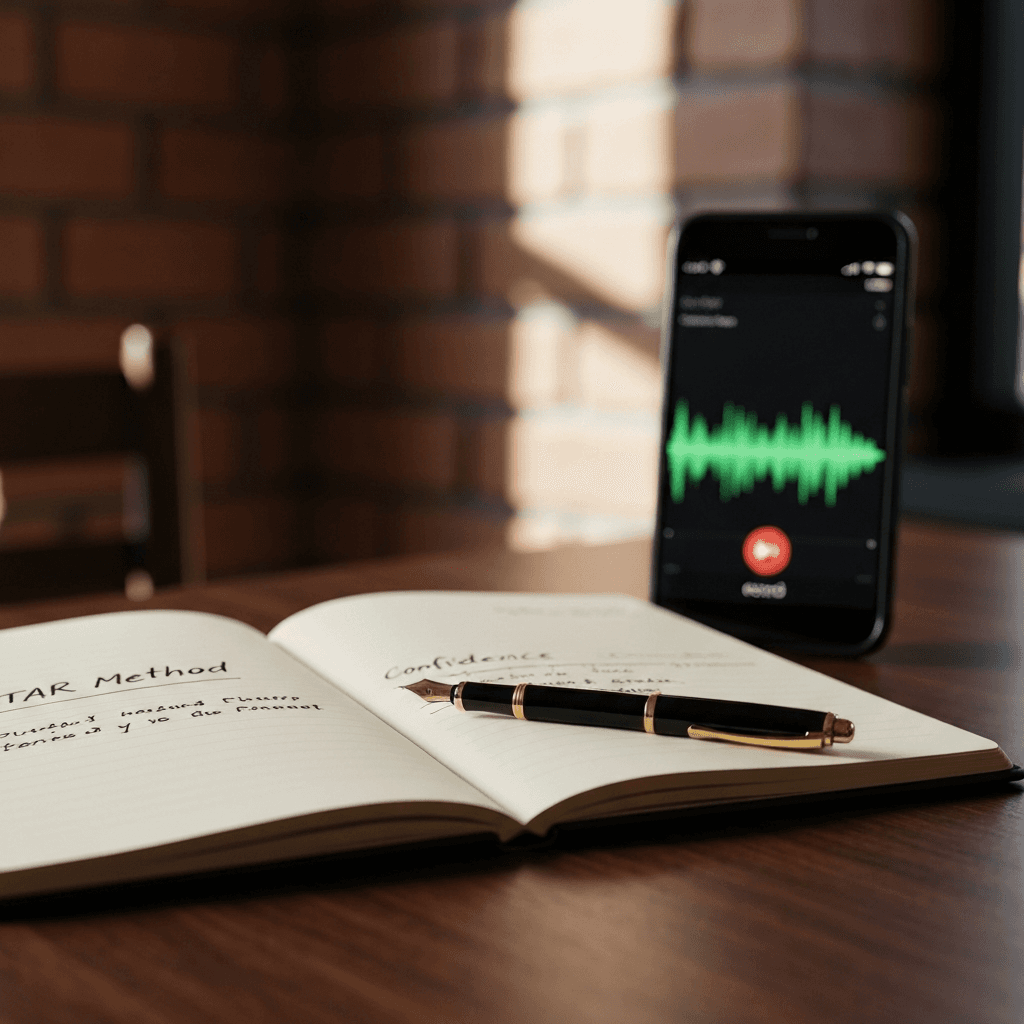
Master AI-powered mock interviews to confidently negotiate salary increases and career advancements.
The annual performance review often brings a mix of anxiety, imposter syndrome, and the daunting task of summarizing twelve months of hard work into a single document. For mid-to-senior level professionals, the stakes are even higher. A successful review doesn't just mean a pat on the back; it is the critical gateway to promotions, salary bumps, and expanded leadership roles.
However, the traditional way we approach performance reviews is fundamentally broken. Relying on flawed memory, subjective self-assessments, and last-minute panic simply doesn't cut it in today's data-driven workplace.
By 2026, 78% of enterprise HR departments will have integrated artificial intelligence into their performance evaluation and continuous feedback systems. Human Resources is using AI to evaluate you. It is time you use AI to evaluate yourself, articulate your value, and secure the career advancement you deserve.
The Performance Review Landscape is Changing
The days of subjective, gut-feeling performance evaluations are rapidly disappearing. Modern talent management platforms are shifting toward continuous, data-driven performance tracking.
Managers now have access to dashboards that aggregate feedback, project milestones, and peer reviews. If you walk into a performance review armed only with vague statements like "I worked really hard this year" or "I am a team player," you will be severely outmatched by the data your manager already holds.
This creates a significant complication for professionals. How do you prove your impact when your company’s HR systems are more advanced than your personal tracking methods? The answer lies in proactive AI literacy and leveraging intelligent tools to take back control of your career narrative.

Enter AI: Your Personal Career Strategist
AI-powered EdTech and career growth platforms are leveling the playing field. They serve as a personalized, always-on career mentor, helping you translate daily tasks into high-impact career milestones. Here is how AI is transforming the review process.
1. Objective Self-Assessment and Bias Reduction
One of the biggest hurdles in writing a self-review is bias—specifically, the tendency to either downplay your achievements or struggle to articulate them clearly. AI tools act as an objective mirror.
By feeding an AI platform your weekly reports, completed project summaries, and peer emails, the system can extract concrete achievements you might have overlooked. It removes the emotional weight of self-evaluation, replacing it with an objective analysis of your output.
Furthermore, AI helps neutralize language. Women and minority professionals often use passive language in self-assessments. AI optimization tools can analyze your draft and recommend stronger, more active verbs that project confidence and executive presence.
2. Quantifying the Unquantifiable
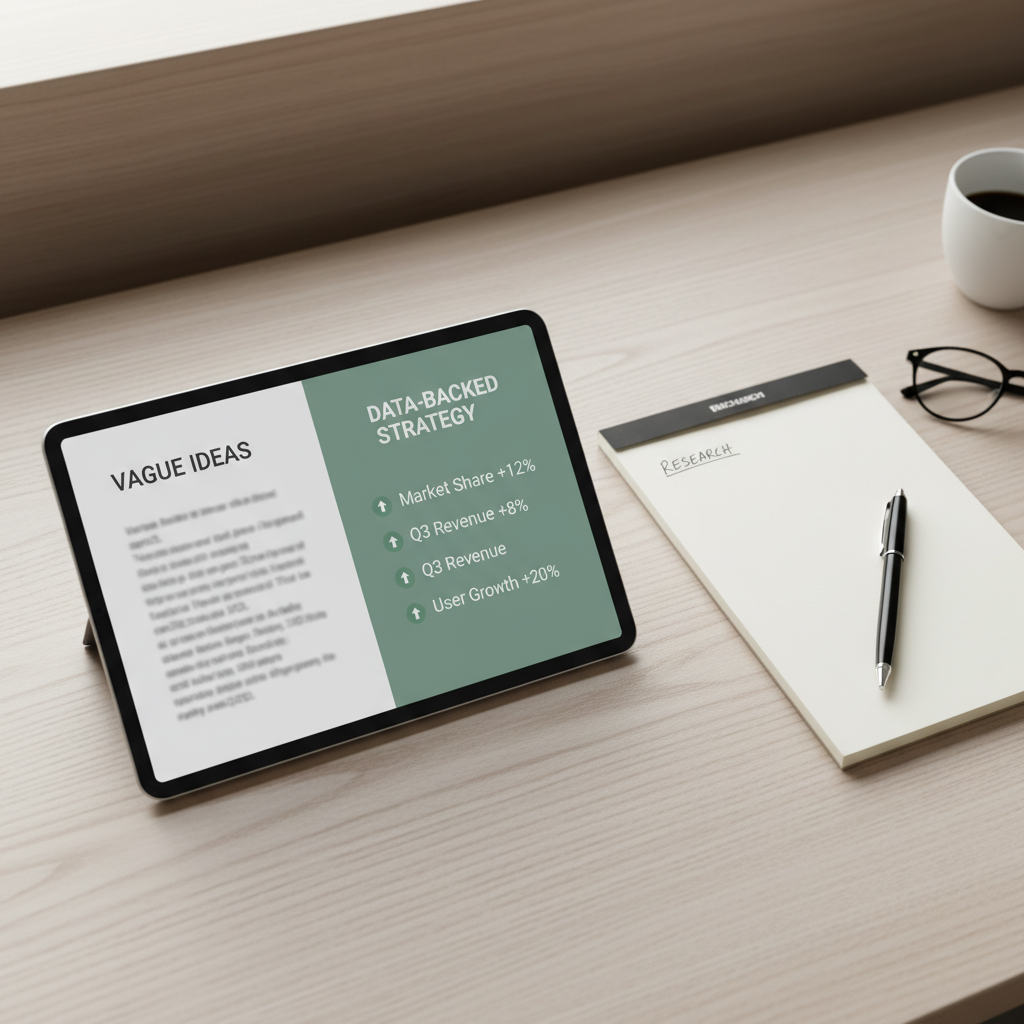
"Improved team efficiency" sounds nice, but "Streamlined team workflows, reducing project turnaround time by 18%" gets you promoted. The challenge is finding those numbers.
Advanced AI platforms can analyze your work inputs—such as calendar data, task completion rates, and project scopes—to help estimate and quantify your impact. AI helps you bridge the gap between qualitative effort and quantitative results, ensuring your professional skills are translated into hard data.
3. Identifying Skill Gaps Before Your Manager Does
A major component of a senior-level performance review is discussing the future. Your manager wants to know what you plan to learn next.
Instead of waiting to be told where you fall short, you can use AI-driven career roadmapping tools to cross-reference your current skills with the requirements of the next role up. This allows you to proactively say, "I noticed a gap in my cross-functional leadership, so I have already enrolled in an AI-curated upskilling program." Proactivity wins promotions.
How-To: Build a Data-Backed Promotion Case Using AI
If you want to secure a promotion in 2026, you need a systematic approach. Here is a step-by-step guide to building an undeniable case using AI capabilities.
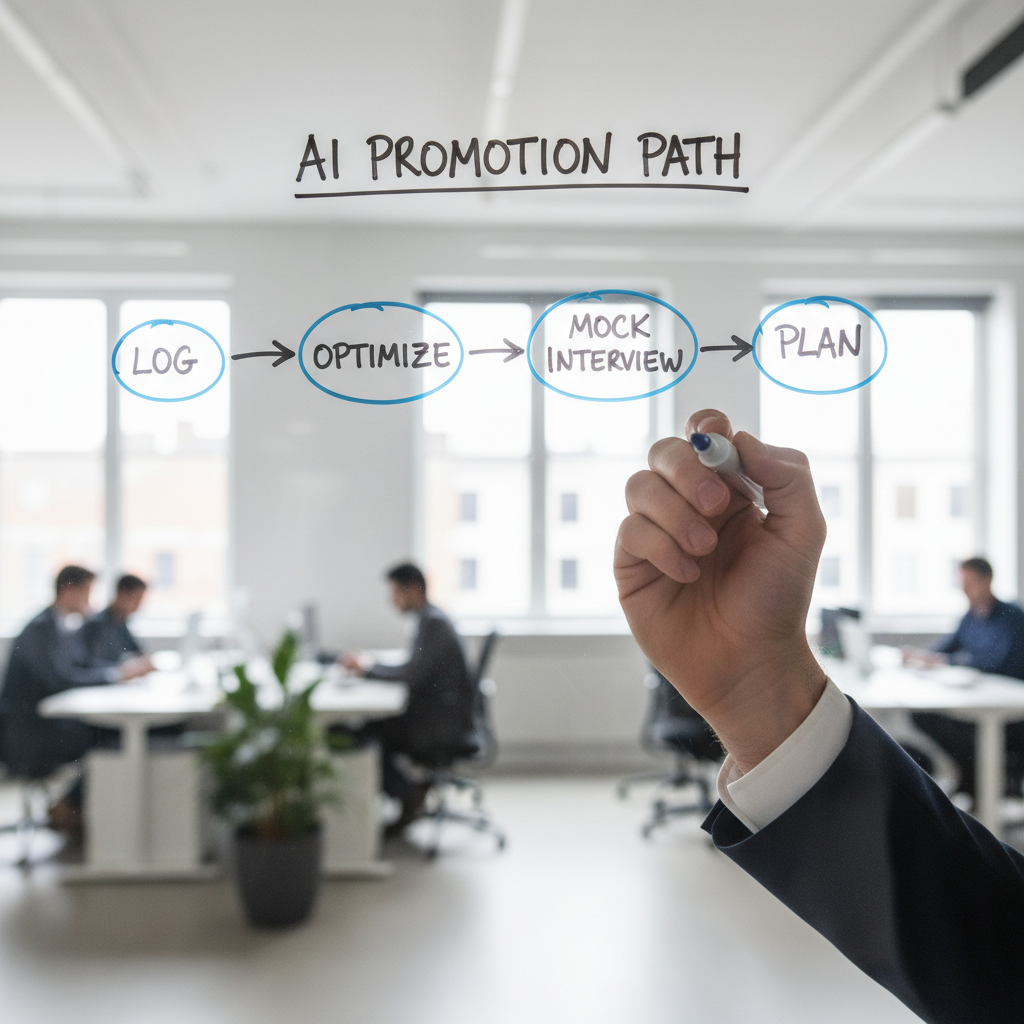
1. Create a "Brag Document" with Continuous AI Logging
Do not wait until December to write your review. Use AI journaling tools to log your weekly achievements. By the end of the year, you can prompt the AI to summarise these entries into major themes, highlighting your most significant wins and leadership moments.
2. Optimize Your Self-Review Draft
Draft your initial self-assessment, then run it through an AI career assistant. Ask the AI: "Analyze this self-review against the core competencies of a [Target Job Title]. Suggest areas where I need more data or stronger action verbs." This ensures your review is perfectly aligned with the promotion you want.
3. Prepare for Pushback with AI Mock Interviews
Negotiating a salary bump or promotion is just an internal interview. Use AI-powered mock interview platforms to simulate the conversation. You can train the AI to act as a skeptical manager. Practice your pitch, receive real-time feedback on your pacing, and refine your counter-arguments for when they mention "budget constraints."
4. Generate a 90-Day Transition Plan
Show, don't just tell. Use AI to draft a strategic 90-day plan outlining what you will accomplish in the new role if promoted. Presenting this during your review shifts the conversation from "Should we promote you?" to "When can you start executing this plan?"
The Authenticity Trap: Why You Still Need the Human Touch
While AI is an incredible enabler, there is a dangerous contrarian insight you must heed: over-reliance on AI risks making you sound like a robot.
If you ask a generic generative AI to write your entire performance review, your manager will notice. The language will sound generic, bloated, and entirely stripped of your personal voice. The goal of using AI is not to outsource your self-reflection; the goal is to augment it.
Your authentic voice, your passion for your specific projects, and your nuanced understanding of company culture must remain front and center. Use AI to mine the data, structure the argument, and refine the phrasing. But you must be the editor-in-chief of your career story.
What You’ll Gain From This
By integrating these AI-driven strategies into your 2026 performance review prep, you will walk away with several distinct advantages:
Data-Backed Confidence: You will enter the review room equipped with undeniable, quantified proof of your contributions, eliminating imposter syndrome.
Strategic Alignment: Your self-assessment will perfectly mirror the expectations and metrics that your HR department and leadership team actually care about.
Enhanced Negotiation Power: Having practiced your pitch via AI mock interviews, you will navigate salary discussions with poise and executive presence.
Proactive Career Mapping: You will position yourself not just as an employee reflecting on the past, but as a future-focused leader ready for your next big challenge.
Conclusion
The 2026 performance review cycle represents a fundamental shift in how professionals evaluate and present their value. The integration of AI into career progression is no longer a futuristic concept—it is the current reality. By leveraging AI-powered platforms for continuous feedback, objective self-assessment, and data-backed negotiation preparation, you take decisive control over your professional trajectory.
Instead of dreading the annual review, you can approach it as a strategic, evidence-based conversation about your future. You have the tools to quantify your achievements, map out your career roadmap, and clearly demonstrate your worth. The technology is here to elevate your career story, providing the data to back up your ambition.
So, as you prepare for your next performance evaluation, ask yourself: Are you going to rely on memory to prove your value, or will you let AI help you build an undeniable case for your next big promotion?