
Hard Skills Get You Shortlisted. Soft Skills Get You Hired.
Most job seekers believe that if they just improve their technical skills, job offers will follow. In reality, technical skills often only get you halfway there.
At Exibel, one pattern appears again and again: Candidates with strong resumes and solid hard skills get interview calls — but struggle to convert them into offers.
The reason is simple. Hard skills open the door. Soft skills decide whether you walk through it.
Why Hard Skills Matter — But Only Up to a Point
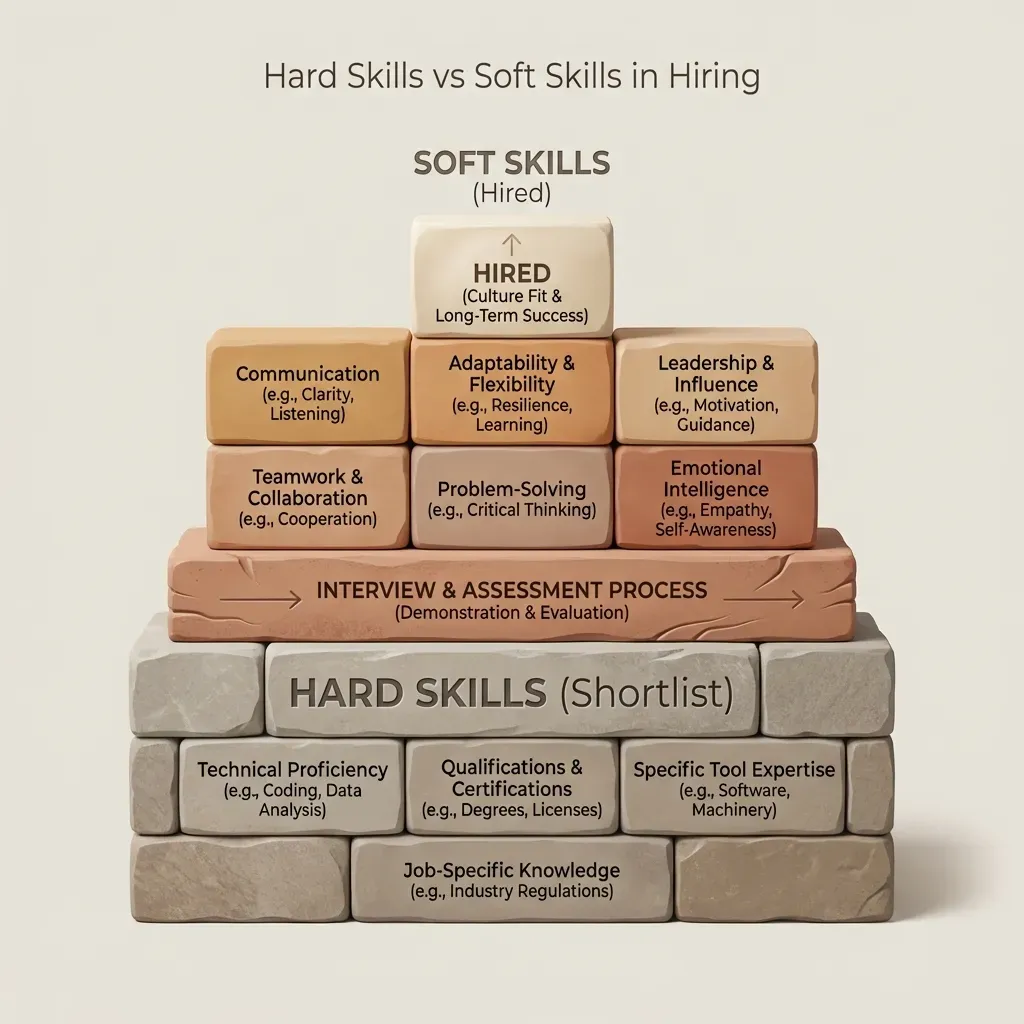
Hard skills are the foundation of shortlisting. They help recruiters answer basic questions:
- Does this person know the tools?
- Do they have the certification?
But once you enter the interview stage, the evaluation changes. The question is no longer can you do the job? It becomes can we work with you?
The Soft Skills That Matter Most in Interviews
Soft skills are not about being extroverted. They’re about how clearly and confidently you express value.
The top differentiators are:
- Communication: Can you explain complex ideas simply?
- Problem-solving: How do you approach challenges?
- Confidence with humility: Can you acknowledge gaps without being defensive?
Exibel treats these as trainable skills — not personality traits.
Why Soft Skills Are Harder to Self-Diagnose
One reason candidates struggle with soft skills is because feedback is rare. Recruiters rarely say "You weren't clear." They just say "We moved forward with another candidate."
This leads candidates to assume the issue is skill-related, keeping them stuck in a loop of adding certifications instead of fixing communication gaps.
Conclusion
Hiring decisions are human decisions. They depend on trust, clarity, communication, and confidence — all of which live beyond a skills list.
At Exibel, career readiness means preparing candidates not just to apply, but to perform. Because in the end, skills get you shortlisted — but how you communicate them gets you hired.