

The Advantage of Phone Salary Negotiation
While a compensation call can feel intimidating, negotiating via phone (or video) offers distinct advantages over email:
- Real-Time Flexibility: Unlike slow email threads, a call provides instant back-and-forth. You can ask clarifying questions, read tone and phrasing, and adjust your approach on the fly.
- Focus and Context: The conversation centers exclusively on the offer and your fit, which helps build rapport and clarify recruiter expectations immediately.
- Strategic Environment: Phone negotiations avoid the formal rigidity of written communication, giving you space to read cues and respond strategically in real-time.
For early-career professionals and those switching roles, a phone negotiation is a chance to navigate uncertainty and project confidence.
Never Settle: Why Negotiation is Essential
The first salary proposal is often just a starting point. It is critical to negotiate because:
- Employers Expect It: Hiring teams anticipate negotiation from strong candidates—which is why the first offer is rarely their absolute final best.
- Long-Term Financial Impact: Your initial salary sets the critical base for all future raises, bonuses, and long-term earnings. Accepting a low offer impacts your entire career trajectory.
- Signals Your Value: Negotiating demonstrates that you value your skills and helps you secure compensation aligned with your professional worth, not just your personal need.
What to Prepare Before the Call
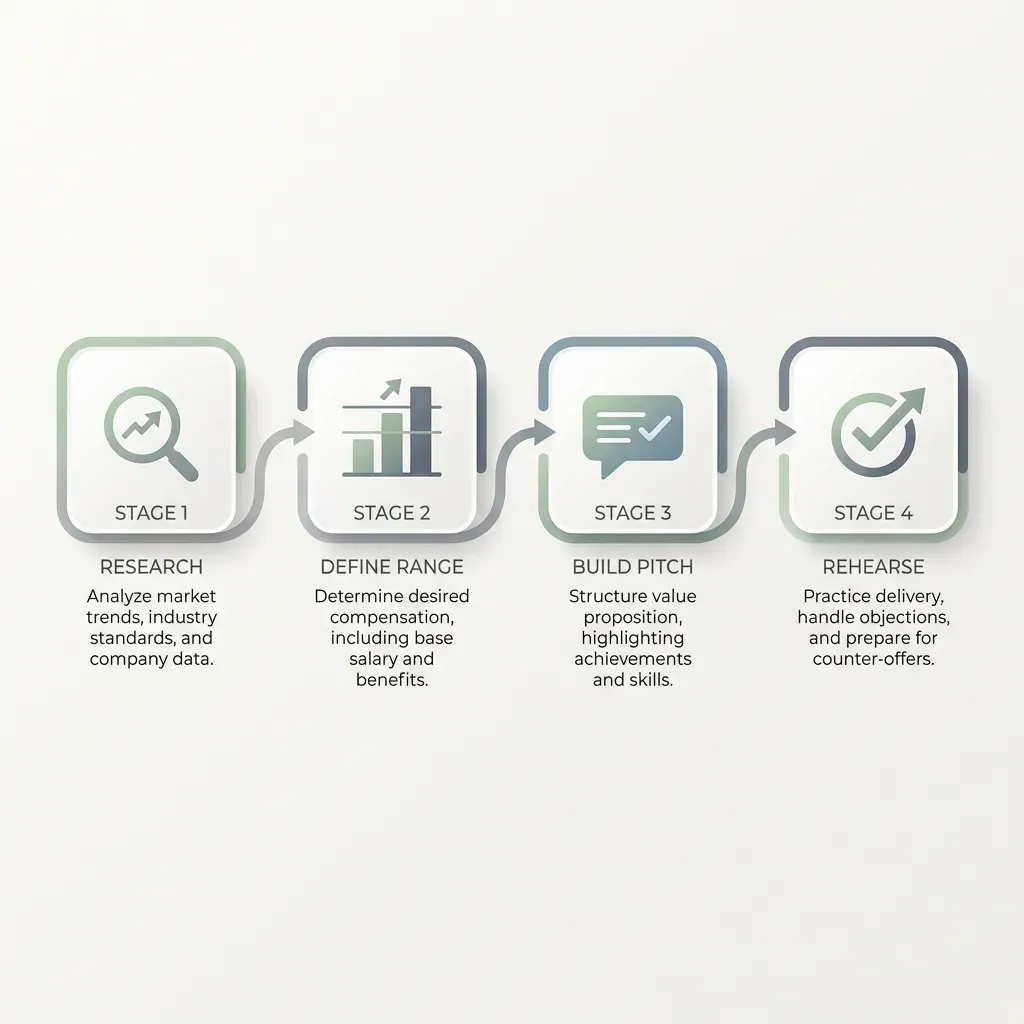
1. Research Your Worth
- Look up typical compensation for similar roles in your industry and region, adjusting for seniority, specific skills, and responsibilities.
- Consider market differences like cost-of-living (e.g., remote vs. on-site, city vs. smaller town).
- Factor in the full compensation package—including benefits, bonuses, growth opportunities, flexibility, and other non-salary perks.
2. Define Your Salary Range
- Aspiration Number: Choose a high but realistic figure. Starting high gives you necessary room to negotiate downward.
- Walk-Away Number: Clearly define the minimum you would accept, ensuring the rest of the package makes it worthwhile.
- Use Precise Figures: When quoting a number, use precise amounts (e.g., ₹9,85,000 instead of ₹10,00,000). This signals careful research rather than a loose guess.
3. Build a Value-Based Pitch
- Reflect on your skills, unique experience, and certifications.
- Frame your contributions in terms of employer benefit, such as improved product quality, cost savings, faster delivery, or new business opportunities.
- Prepare specific, measurable examples or metrics (e.g., growth percentages, project successes) to back up your value claim.
4. Rehearse the Conversation
- Practice your talking points: expressing appreciation, stating your value, asking questions, and handling common pushback.
- Maintain an assertive, clear, and professional demeanor, avoiding an overconfident tone.
- Keep notes ready with key data points: market benchmarks, your salary range, benefit details, and fallback options.
Conducting the Call: How to Handle the Discussion
When you are on the call:
- Lead with Enthusiasm: Begin by thanking them for the offer and reaffirming your strong interest in the opportunity before transitioning to the compensation discussion.
- Focus on Value, Not Need: Frame your counter-offer based on the value you bring to the company, avoiding personal financial reasons.
- Listen Actively: Pay close attention to their tone and hesitation, as these non-verbal signals are often more telling than the words themselves. Ask clarifying questions as needed.
- Be Collaborative: Negotiate toward a win-win outcome. Show willingness to find a middle ground while aiming for fair compensation.
- Limit Back-and-Forth: Have a counter-offer ready. Typically, one or two counter-offers is reasonable; more than that can signal indecision or an over-demanding mindset.
Questions Worth Asking
Asking strategic questions shows professionalism and helps you fully evaluate the offer:
- “How was this position’s salary range determined?”
- “What factors influence compensation decisions for this role?”
- “What performance metrics or milestones determine bonuses or raises?”
- “Is there flexibility around other elements (e.g., bonuses, PTO, flexible work options)?”
These questions demonstrate that you are evaluating the offer holistically.
When to Accept — and When to Walk Away
Before saying “yes”:
- Request Written Confirmation: Ask for formal documentation of the offer, including all compensation and benefit components, in writing.
- Take Time to Decide: If you need time to think, request a reasonable window (e.g., 24–48 hours).
- Accept if Value is Met: If the full package meets or exceeds your minimum acceptable value, you should accept.
- Politely Decline if Unmet: If the offer falls short and there is no room for negotiation, it is acceptable to politely decline, especially if you feel your value is not being recognized.
Negotiation is not about forcing a number—it is about aligning value, fit, and fairness.
Conclusion
Negotiating compensation, especially over the phone, is a strategic opportunity. With thorough preparation, a value-based argument, and a professional approach, you can secure fair compensation aligned with your worth. As a strong candidate, you should always research, prepare, and evaluate the entire offer, not just the base salary, to set your career on a strong financial footing.