

Why Generic Resumes Often Fail — and Tailored Ones Win
In today’s job market, dozens or even hundreds of applicants may apply for the same role. A generic resume makes it hard to stand out — and easier for hiring systems and recruiters to overlook you.
By contrast, a tailored resume:
- Reflects exactly what the employer is looking for — making you appear as a strong fit at first glance
- Passes through early screening tools (often Applicant Tracking Systems, or ATS) more reliably when it uses relevant keywords
- Demonstrates that you’ve taken time and care — signaling genuine interest and professionalism
For job‑seekers at any stage — students entering the workforce, mid‑career professionals shifting roles, or people reworking their profile — tailoring is often the difference between being ignored and getting a callback.
How to Analyze a Job Description — and Extract What Matters
Before you rewrite your resume, you need to thoroughly understand the job description. Here’s how to dissect it effectively:
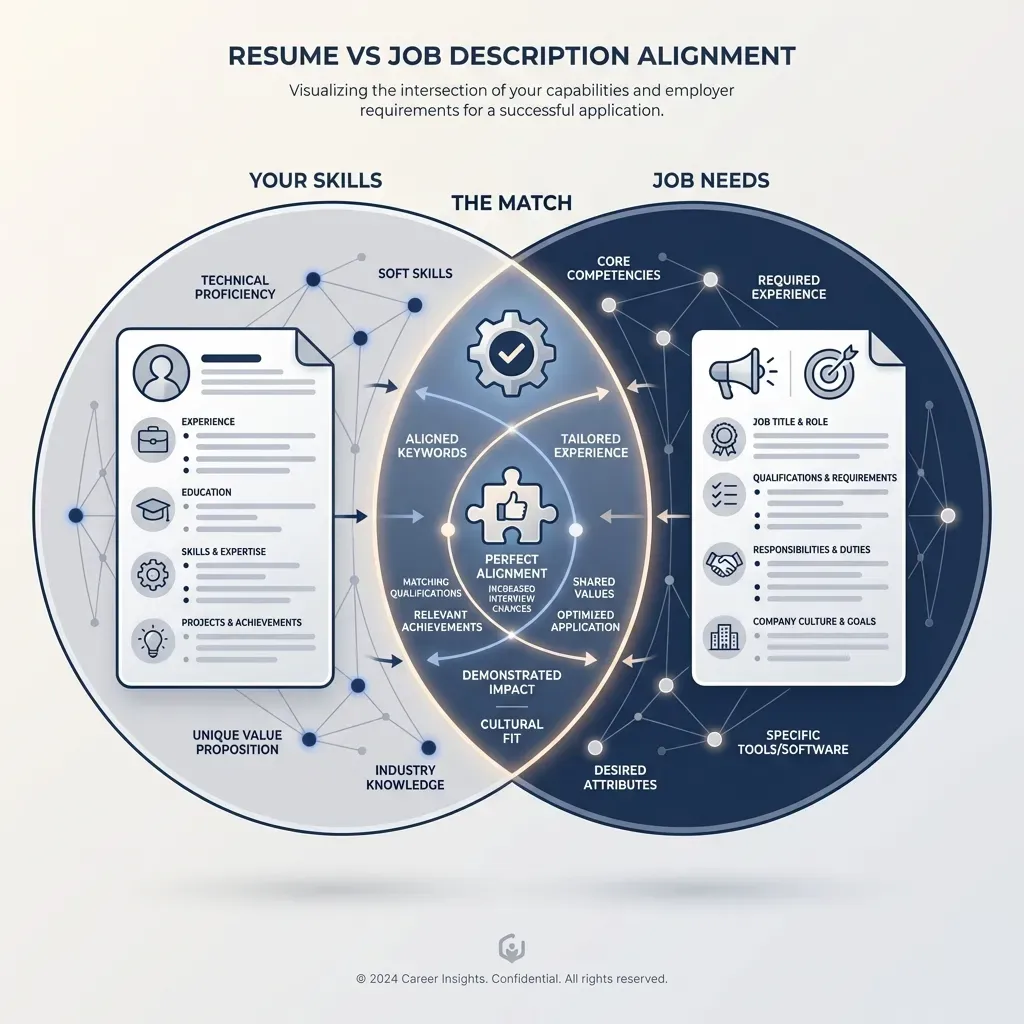
- Identify recurring keywords and skills. These often include both technical terms (like “data analysis,” “SaaS”) and soft/role-based skills (like “cross-functional collaboration,” “project management”).
- Note required experience level and role-specific responsibilities. If a job mentions “5+ years managing teams” or “proficiency in SQL,” these become critical cues.
- Understand implicit signals — company culture, priorities, and values. Some descriptions emphasise teamwork, innovation, client-focus, or growth mindset. Reflecting those subtly signals cultural fit.
By extracting these elements, you create a blueprint for how your resume should look to match — not just in content, but in tone and priorities.
Building a Role‑Specific Resume: Section-by-Section
Once you have the blueprint from the job description, revise your resume along these dimensions:
Professional Summary / Objective
- Rewrite your summary/introduction to highlight core skills and strengths that match the job.
- Focus on value: what you bring, not just what you want.
Experience / Project History
- For each role, pick out achievements or tasks that map directly to requirements listed in the job description.
- Where possible, quantify results (e.g., “improved process efficiency by 20%”, “led cross‑functional team of 8”).
- Use strong action verbs and clear, measurable outcomes.
Skills / Competencies
- Align your skills list with both hard and soft skills from the job description.
- Prefer specificity — rather than generic “team player,” use “cross‑functional collaboration,” “stakeholder management,” or “data‑driven decision making,” if relevant.
Education / Certifications / Additional Sections
- If relevant, emphasize coursework, certifications, or training that mirror the role’s needs.
- Projects, volunteer work, or internships can add value — especially when you’re early-career or transitioning fields.
By customizing each section, you ensure your resume speaks the employer’s language — making it easier for both automated filters and human reviewers to see you as a match.
Boost Efficiency with Smart Tools — But Don’t Skip the Human Touch
Tailoring a resume for each application can be time‑intensive. That’s where smart tools come in:
- Use AI or assistants to extract keywords, suggest improvements, or reframe sentences for clarity and impact.
- Let tools help highlight transferable skills or match your background to job requirements — especially if you’re transitioning fields or have a diverse background.
But remember: no tool can fully replace your judgment. Always review and refine — ensure authenticity, avoid keyword stuffing, and tailor tone to reflect your personal style and real achievements.
When to Customize vs. When to Use a Base Resume
You don’t need a unique resume for every single application — but there are scenarios where tailoring can make a big difference:
- For roles that match your career goals closely — where requirements overlap significantly with your background.
- When the job description uses very specific skills, keywords, or industry jargon.
- If you’re shifting roles or industries — tailoring helps bridge the context gap and highlights transferable strengths.
For broader or less‑specific roles, a polished base resume may suffice, as long as it reflects your core strengths and skills clearly.
Final Checklist Before You Hit ‘Send’
Before submitting a tailored application, verify:
- Your resume includes key skills and responsibilities from the job description — without overstuffing or exaggeration.
- Achievements are real, quantifiable where possible, and relevant to the new role.
- Formatting is clean, professional, and easy to read (good use of headings, bullets, short sentences).
- You have updated all relevant sections — not just experiences, but summary, skills, education/certifications.
- The tone remains authentic and reflects your real profile and voice.
If all boxes are checked — your application is ready.
Conclusion
In a competitive job market, a “one‑size‑fits‑all” resume rarely works. Tailoring your application — especially by aligning it closely with each job’s requirements — significantly increases your chances of getting noticed, passing screenings, and landing interviews.
At Exibel, we champion smart, efficient, and honest job preparation. By combining AI‑driven tools for quick tailoring with your personal insight and context, you can craft applications that are both optimized and authentic. This balanced strategy gives you the best shot at standing out — whether you’re a fresh graduate, mid‑career professional, or someone pivoting industries.
Use the checklist above. Align your story with the role. And make each application count.