

Your Resume Isn’t Bad — It’s Just Not Role-Ready
One of the most common things job seekers say is: “I have a good resume, but I’m still not getting interview calls.”
In most cases, they’re right. The resume is good. But it’s not role-ready.
Hiring today is not about having a strong profile in general. It’s about showing clear relevance for one specific role at a time.
The Difference Between a Good Resume and a Role-Ready Resume
A good resume lists your experience. A role-ready resume explains why you fit this role.
Recruiters are asking:
- Does this candidate match this role?
- Do their skills map clearly to the job requirements?
- Is their experience at the right level of seniority?
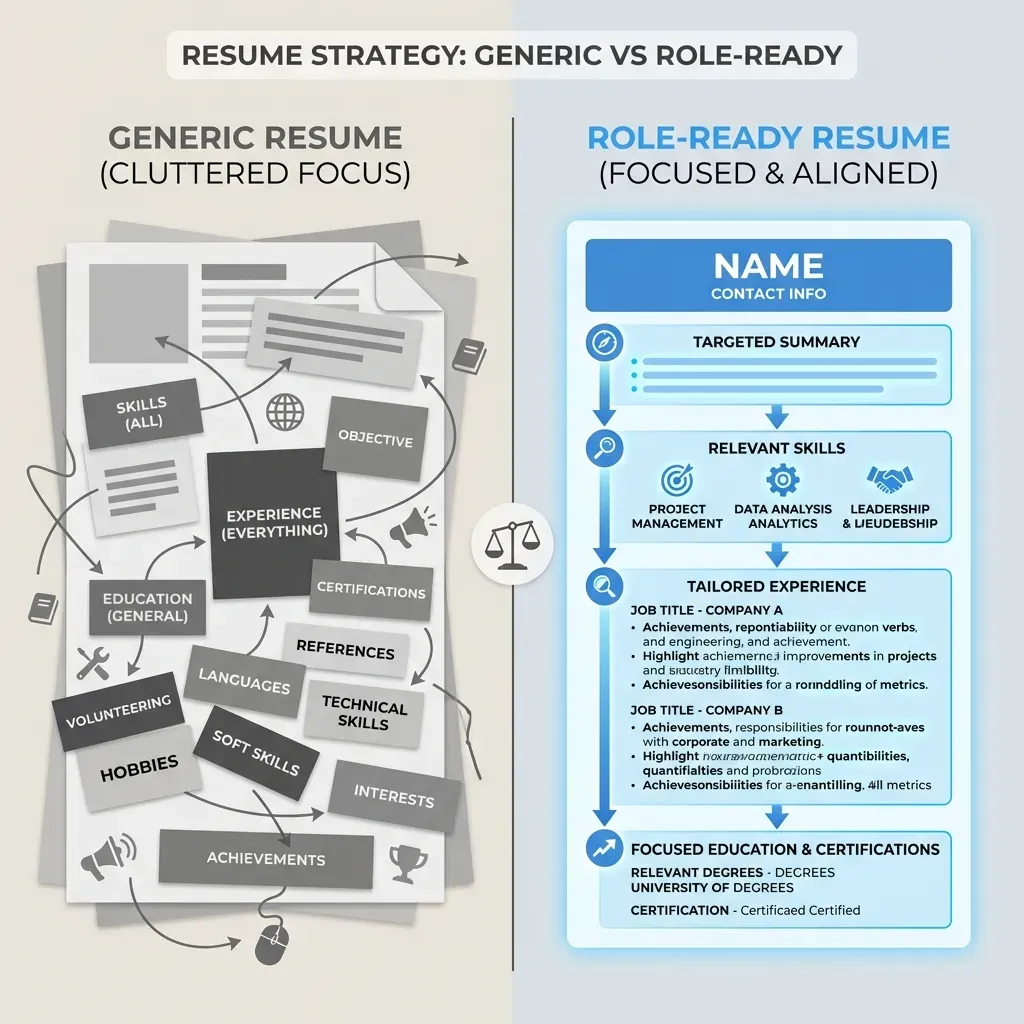
If the answer isn’t obvious within seconds, the resume is skipped.
Why Generic Resumes Fail
Generic resumes try to cover everything. And in doing so, they fail to communicate anything clearly.
Scenario:
- Resume A: Lists 15 skills including sales, marketing, operations, and coding.
- Resume B: Focuses purely on digital marketing campaigns and ROI analysis for a Marketing Manager role.
Reflect: Which one gets the call? Resume B, because it eliminates the guesswork.
Exibel’s insight here is simple: Hiring systems reward clarity, not versatility.
Role-Based Resumes vs One-Resume-for-All
A role-based resume is built backward from the job, not forward from your history.
It asks: “What does this role require — and how does my experience support that?”
This means highlighting only the most relevant experiences and reframing responsibilities as outcomes aligned to the role.
Conclusion
If your resume isn’t getting shortlisted, it usually means it’s speaking to everyone instead of one role. A role-ready resume doesn’t just tell your story — it tells the right story for the job you want.
At Exibel, the goal is simple: Help candidates stop guessing — and start getting shortlisted. Because careers don’t move forward on effort alone. They move forward on alignment.