

What is an ATS and Why Does It Matter?
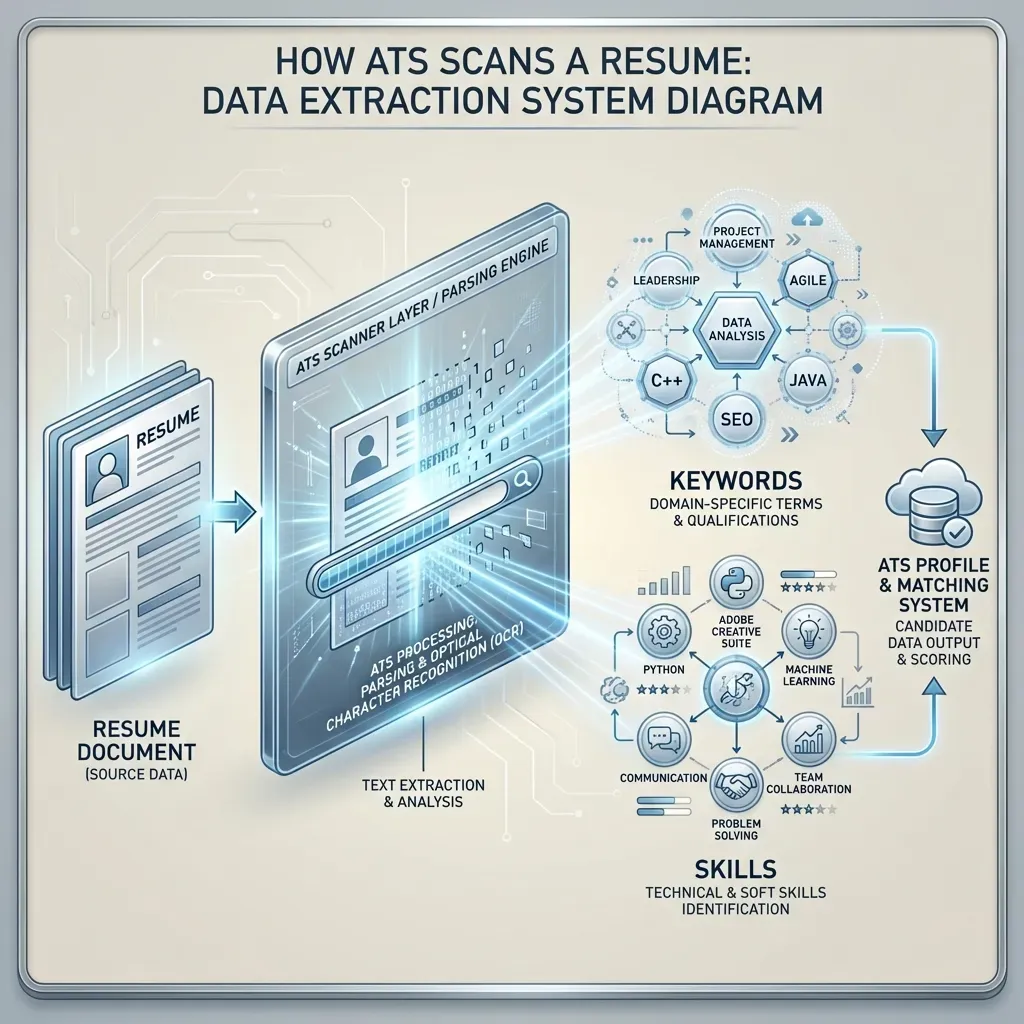
Before your resume reaches a human recruiter, it likely passes through an Applicant Tracking System (ATS). This software scans, parses, and ranks applications based on keywords and formatting.
If your resume isn’t optimized for ATS:
- It may get discarded automatically — even if you are qualified.
- Important details (like contact info or skills) might be misread or lost.
- You lose the chance to tell your story to a real person.
The goal isn’t to write for a robot, but to ensure the robot can read your resume so a human gets to read it.
Formatting Do’s and Don’ts
To ensure your resume is parsed correctly, keep formatting clean and standard.
Do:
- Use standard fonts: Arial, Calibri, Roboto, or Helvetica are safest.
- Keep structure simple: Use clear headings (Experience, Education, Skills) and logical flow.
- Use standard file formats: MS Word (.docx) or PDF (generated from text, not image).
- Use bullet points: Standard circles or squares are best for readability.
Don’t:
- Avoid columns and text boxes: Many older ATS parsers struggle to read multi-column layouts or text inside boxes.
- Skip graphics and icons: Visual scales (e.g., “5/5 stars” for Java) are unreadable to bots.
- Don’t put key info in headers/footers: Some systems ignore these areas; keep contact info in the main body.
Optimizing Keywords — Without "Stuffing"
Keywords are the bridge between your experience and the job description.
- Mirror the Job Description: If the role asks for “Project Management” and “Agile,” ensure those exact terms appear in your resume.
- Contextualize Skills: Don’t just list keywords at the bottom. Weave them into your bullet points (e.g., “Managed Agile projects using Jira…”).
- Include Soft Skills: Terms like “Collaboration,” “Leadership,” and “Problem Solving” are often tracked too.
Warning: Don’t hide white text keywords or copy-paste the whole job description invisible. Modern systems flag this as cheating.
The Human Element: Don’t Forget Readability
Passing the ATS is step one. Impressing the recruiter is step two.
- Focus on Impact: “Increased sales by 20%” is compelling to both AI and humans.
- Keep it Concise: Use active voice and short sentences.
- Proofread: Typos can hurt your ranking and look unprofessional to human readers.
Conclusion
An AI-friendly resume isn’t about stripping away personality — it’s about removing barriers. By using clean formatting, relevant keywords, and clear structure, you ensure your qualifications shine through the digital filter, landing your resume exactly where it belongs: on a recruiter’s desk.
At Exibel, we help you strike that balance — technical optimization for the machine, and compelling storytelling for the human.